
By Final Rentals | Dubai & Doha Operations Team
Airspace across the Middle East is becoming increasingly crowded and subject to growing restrictions. Escalating geopolitical tensions associated with the current operational situation, referred to as “Operation Epic Fury,” are placing significant strain on the aviation networks that typically link the Gulf Cooperation Council (GCC) with global destinations. Major airports such as Dubai International (DXB), Abu Dhabi International (AUH), and Hamad International Airport in Doha are facing intermittent closures, flight diversions, and extensive rerouting.
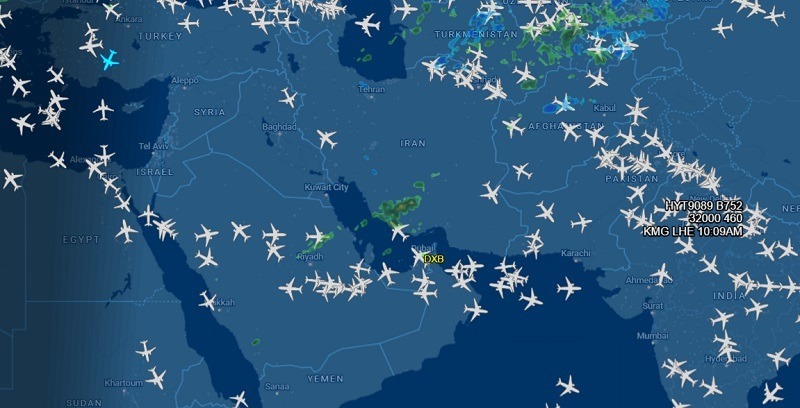
Image Courtesy: Flight Aware, March 03, 2026
More than one million travellers in the region are stranded or trying to continue their journeys, while airlines are largely advising passengers to wait. Spending extended time in airport terminals or hotel lobbies without control over travel plans can quickly become stressful and difficult to manage from a logistical perspective.
Final Rentals operates directly on the ground in Dubai and Qatar. As a global car rental provider, we observe the situation beyond aviation data alone. Conditions are visible through everyday indicators such as traffic patterns along Sheikh Zayed Road and the queues forming at regional border crossings.
When flight schedules become uncertain, road transport provides a practical alternative. Effective strategies can help maintain mobility, safety, and logistical flexibility during the current disruption, focusing on five key areas: cross-border ground travel, retaining independence while stranded, clarity on rental protection in conflict situations, flexible booking options, and evacuation planning for expatriates.
One of the first impacts of the current situation is the interruption of regional air routes. Recent data over the past 72 hours shows that almost 40% of flights between the UAE, Saudi Arabia, and Oman have been delayed or cancelled due to airspace security alerts. For travellers trying to reach functioning airports or safer destinations, depending entirely on air travel has become a risky option.
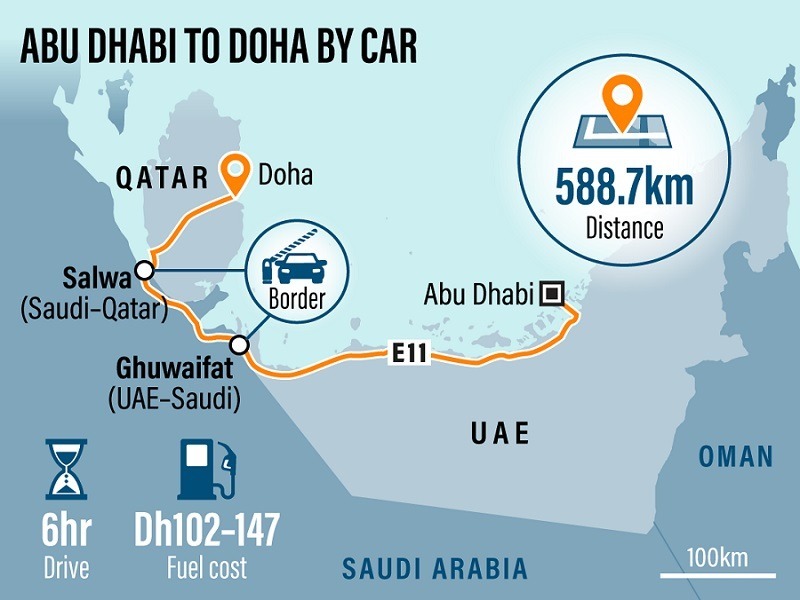
Vehicle access shifts from convenience to necessity in these circumstances. The GCC highway network is among the most advanced road systems in the world. Driving from Dubai to Muscat in Oman takes approximately 4.5 hours via the Hili Border crossing. Travelling from Dubai to Dammam in Saudi Arabia requires roughly 6 hours by road. While airspace restrictions affect flights, land borders across much of the GCC have remained open for civilian travel, provided visitors hold the correct visas and documentation.
For a traveller stranded in Dubai after a cancelled flight, a rental vehicle provides the option to reach another airport that is currently operating. If departures from Doha face restrictions, driving to a hub in Oman or southern Saudi Arabia may offer the only viable route for securing onward flights to Europe or Asia.
Effective cross-border travel requires planning. Final Rentals currently recommends that travellers consider long-term car rentals in the UAE, typically for 30 days or more. Longer rental periods provide greater stability when planning travel between GCC countries. Short daily rentals frequently include mileage limits or insurance restrictions that prevent cross-border use.
Equipped with the official Mulkiya registration documents required at customs, our long-term fleet also offers GPS tracking and roadside assistance across all GCC borders. The goal is not to enter conflict zones. The emphasis is on navigating the extensive GCC highway network to access safe locations, allowing travellers to reach an alternative airport if their original one is closed.
The consequences of travel disruption extend beyond cancelled tickets. Current reports suggest that more than 30,000 German tourists and approximately 58,000 Indonesian pilgrims are currently stranded across the region, staying in hotels, cruise terminals, or airport lounges while waiting for further travel arrangements.
Being stranded results in a loss of personal control. Travellers waiting for airlines to reschedule flights must rely entirely on external timelines and decisions. Families with children, elderly pilgrims, and visitors unfamiliar with the region are particularly affected by this uncertainty.
The Safe Harbour rental concept is designed to address this challenge. Access to a private vehicle allows travellers to move freely rather than remain confined to a single location. It allows them to purchase supplies, visit quieter areas, or relocate to different accommodations without relying on public transport or hotel transfers.
For Indonesian pilgrimage groups travelling together, rental vehicles allow organisers to manage logistics more efficiently. Instead of waiting for charter buses that may be delayed or unavailable, smaller groups can move gradually toward consulates or assembly points. German tourists, many of whom value independent travel, regain a sense of normality. They may still be waiting for flights, but they are doing so with greater flexibility and comfort.
Final Rentals is prioritising vehicle availability for travellers affected by these disruptions. SUVs and larger vans are being allocated to help families and groups remain together during uncertain periods.
One of the most common questions raised at our counters in Dubai and during pickup in Qatar concerns liability. Travellers frequently ask whether they would be responsible if a rental vehicle were damaged because of the conflict.
This concern is understandable. Most travel insurance policies and rental agreements include exclusions for Acts of War, civil unrest, or force majeure events. During normal circumstances, these clauses receive little attention, but during Operation Epic Fury, they become far more relevant.
Transparency is essential. Standard policies generally exclude damage caused directly by military activity, terrorism, or nuclear incidents. However, conditions within the UAE and Qatar remain stable despite wider regional tensions. In practice, risks to vehicles are more likely to arise from secondary factors such as heavy traffic, sudden braking, or opportunistic theft during periods of uncertainty.
Final Rentals has introduced a Crisis Coverage Protocol during the current security alerts.
Travellers who want additional reassurance are encouraged to select the Premium Protection Package. This option removes the deductible for incidents unrelated to war and includes twenty-four-hour priority support. Each claim is assessed individually with a focus on supporting the customer.
Government authorities, including the UK Foreign Office and the United States State Department, currently advise travellers not to travel to airports unless their flight departure has been confirmed. This creates a practical dilemma for rental customers. A vehicle may be required to reach the airport, yet travellers may hesitate to reserve one without certainty about their flight.
To address this challenge, Final Rentals has introduced a Zero Penalty Crisis Policy across the Middle East region.
This policy eliminates the financial risk of planning. Travellers can book a vehicle to stay mobile, cancel if a flight is cancelled, or extend if delayed, while Final Rentals handles all logistics.
The Gulf hosts a significant expatriate community, including around 300,000 British citizens and hundreds of thousands from Europe, Asia, and other regions. Governments are preparing evacuation plans with assembly points at ports or designated airports for charter flights.
Public transport can become unreliable during evacuation operations. Bus services may be redirected, metro services may be reduced, and taxis may become difficult to obtain or extremely expensive.
For expatriate families needing to reach assembly points, many of which are located in industrial ports or specialised zones, access to a private vehicle provides the most reliable final stage of the journey. Final Rentals has developed an Evacuation Support Guide for expatriate travellers.
For British citizens and other expatriates who do not own vehicles in the UAE, rental access may provide a crucial link between their residence and evacuation transport. Reservations may be prioritised for travellers who can present proof of evacuation registration with their embassy.
Current estimates suggest that more than one million travellers across the Middle East are experiencing delays, rerouting, or uncertainty regarding flights. Air travel remains highly centralised and vulnerable to airspace restrictions, while road transport offers a decentralised and adaptable alternative.
As a global car rental provider operating across Dubai and Qatar, Final Rentals focuses on three priorities during this disruption.
Geopolitical events are beyond the control of travellers and businesses, but operational readiness can be managed. In uncertain times, flexibility matters more than speed, and it starts with the ability to move freely.
Stay safe. Stay mobile.