
The dusty plains and rugged hills of Central Anatolia hold secrets buried deep beneath the millennia. While many visitors to Turkey flock to the Aegean coast or the bazaars of Istanbul, a profound journey awaits those willing to venture east of the capital, Ankara, into the heartland of the ancient Hittite Empire.
The Hittite Empire, flourishing between approximately 1650 and 1180 BC, dominated Anatolia, forging treaties and waging wars that shaped the ancient world. This Bronze Age superpower that rivalled Egypt and Babylon, left behind a legacy etched into rock and city walls, a legacy best explored today via the magnificent Hittite Trail (Hitit Yolu). This article will serve as your guide to traversing this historic route, offering detailed itineraries for both the committed hiker and the driving tourist.
The trail itself is primarily centred around the province of Çorum, located roughly 200 to 250 kilometres east of Ankara. It is a vast, meticulously marked route covering an approximate total length of 385 kilometres. This extensive network comprises 17 distinct, marked trekking routes, accounting for about 236 kilometres, alongside several designated mountain bike trails.
The history and geography of the trail are anchored by a strategic triangle of three principal historic cities: Hattusa, the ancient political and religious capital; Alacahöyük, an important older cult and burial centre; and Şapinuva, a key military and administrative outpost. Engaging with the Hittite Trail is not just a walk through the countryside; it is a physical immersion into the infrastructure of a forgotten superpower.
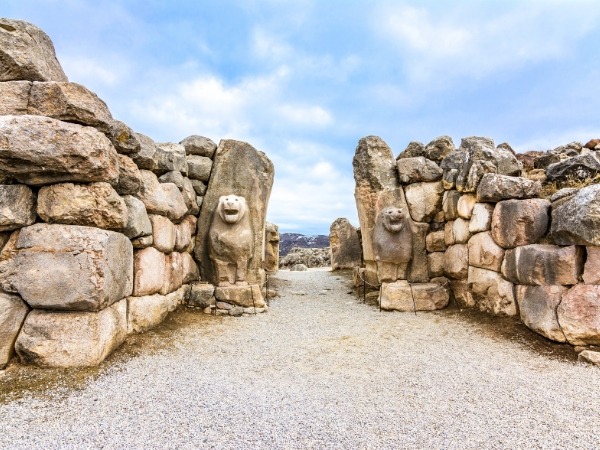
For travellers seeking a deep, physical connection to the past, this multi-day trekking route offers an unparalleled experience. This itinerary focuses on the core loop that links the three essential historic cities, following the ancient paths and immersing the hiker in the rugged landscapes of the Hittite heartland.
The journey commences in Boğazkale, the quiet, modern village that serves as the gateway to the UNESCO World Heritage site of Hattusa. The entire first day must be dedicated to exploring the Hittite capital. Hikers should walk the inner and outer city walls, traversing the vast archaeological park. Key sites include the monumental fortifications and the formidable stone guardians of the Lion Gate, the imposing King's Gate, and the enigmatic Sphinx Gate. These massive structures bear silent witness to the city's former grandeur.
In the late afternoon, an essential 2-kilometre trek leads northeast to the Yazılıkaya Open-Air Sanctuary. This temple, where the full pantheon of Hittite gods and goddesses is carved into rock reliefs, provides a spiritual and artistic climax to the day, particularly poignant as the evening sun casts long shadows over the carvings.
The second day presents the longest and arguably most demanding leg of the trek, covering approximately 25 to 30 kilometres as the path winds toward Alacahöyük. This segment of the route faithfully follows ancient roads and seldom-used rural tracks, offering sublime, isolated views of Central Anatolia. The terrain connects hikers directly to the landscapes traversed by Hittite caravans and soldiers.
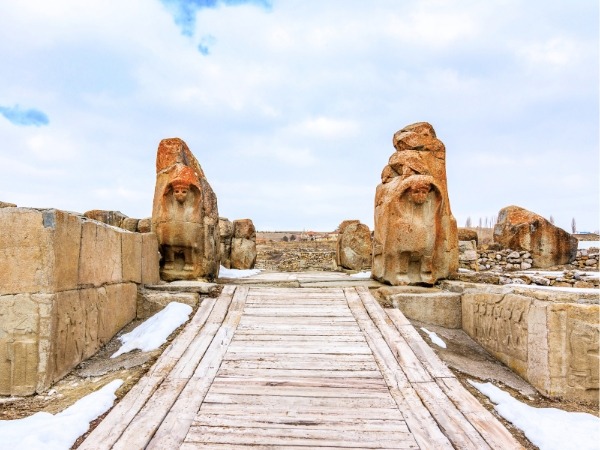
Upon arrival, the focus shifts to Alacahöyük, a critical settlement that predates the Hittite Empire but was later incorporated into it. Here, you can explore the famous Bronze Age Royal Tombs and the spectacular decorative relief carvings of the Sphinx Gate, which is one of the best-preserved monuments along the route.
The final hiking day involves a trek toward Şapinuva (Ortaköy). Şapinuva served as a vital Hittite military and administrative centre, particularly important during periods when Hattusa was under threat. The site is renowned for its discovery of extensive archives containing cuneiform tablets, offering an invaluable window into Hittite bureaucracy and diplomacy. Trekking to this point reinforces a sense of the logistical and communication network that sustained the entire empire. After exploring the excavations at Şapinuva, the three-day trek comes to a close. From this location, you must arrange for pre-booked local transport to take you back toward Boğazkale or Çorum to connect with onward travel plans.
For travellers who wish to absorb the history without the physical demands of a multi-day hike, or who are restricted by time, a driving route originating from Ankara provides a highly efficient and comfortable way to see the main highlights.
The journey begins with a cultural foundation in Ankara. Before driving east, you should visit the Museum of Anatolian Civilisations. This museum houses an astonishing collection of original Hittite artefacts, including reliefs, bronze standards, and pottery excavated from the very sites along the trail. Viewing these objects beforehand provides essential archaeological context, elevating the experience of the ruins. The drive from Ankara to Boğazkale is manageable, covering approximately 200 kilometres and taking between 2.5 and 3 hours.
In the afternoon, the focus turns to the ruins. Drivers can follow the circular route around the vast site of Hattusa, stopping at designated parking areas to walk through the major gates, such as the Lion Gate. The drive itself covers the monumental scale of the ancient city. In the late afternoon, a short drive or walk to Yazılıkaya is essential to witness the carved reliefs before settling in for the night in local accommodation.
Day two involves a short drive from Hattusa to Alacahöyük, approximately 30 kilometres away, taking about 30 minutes. The morning should be spent thoroughly exploring the site's impressive Sphinx Gate and the local museum, which contains artefacts specifically related to the site's unique history. After enjoying local cuisine in the nearby town of Alaca or Çorum, the return journey to Ankara begins. A possible alternative, time permitting, is a short detour to Şapinuva to view the administrative centre before heading west back toward the capital.
The Hittite Trail offers more than just the remains of cities; it is a profound historical seminar. It is important to remember the wider significance of these sites, including the discovery in Hattusa of tablets detailing the Kadesh Treaty, which is recognised as the world's oldest known peace treaty, signed between the Hittites and the Egyptians. This highlights the empire's sophisticated diplomatic power.
Beyond the ruins, the journey introduces visitors to modern Central Anatolian culture. The region around Çorum is known for its hospitable culture and delicious local cuisine, providing a rewarding contrast to the archaeological sites. For those interested in expanding their archaeological scope, a brief mention should be made of other Hittite artistic sites, such as the rock reliefs at Eflatunpınar near Beyşehir or İvriz near Ereğli, which demonstrate the geographic reach of their artistry.
Proper preparation is vital for a safe and rewarding experience on the Hittite Trail, regardless of the chosen mode of transport. Here are some tips to help you have a smooth journey.
The Hittite Trail is more than just a demanding hike or a scenic drive; it is a physical journey back through 4,000 years of recorded history. Whether one chooses the challenging, multi-day trek that connects the ancient capitals or opts for the streamlined driving route from Ankara, the journey transports the visitor to the powerful, forgotten heart of one of antiquity's greatest empires. This experience offers an unmatched combination of stunning Central Anatolian scenery and monumental archaeological sites, from the towering defences of Hattusa to the sacred rock sanctuary of Yazılıkaya.
The enduring legacy of the Hittites—the sophisticated warriors, the masterful builders, and the astute diplomats—still powerfully resonates in the meticulously laid stones and the silent, sweeping landscapes of the Çorum region. By consciously tracing their paths, the traveller connects deeply to the very foundation of Anatolian civilisation and ancient global power.
Ready to start your adventure? Secure your maps, pack your bags, book your rental car, and commit to stepping onto the path less travelled to explore the hidden kingdoms and ancient secrets preserved along the magnificent Hittite Trail.